
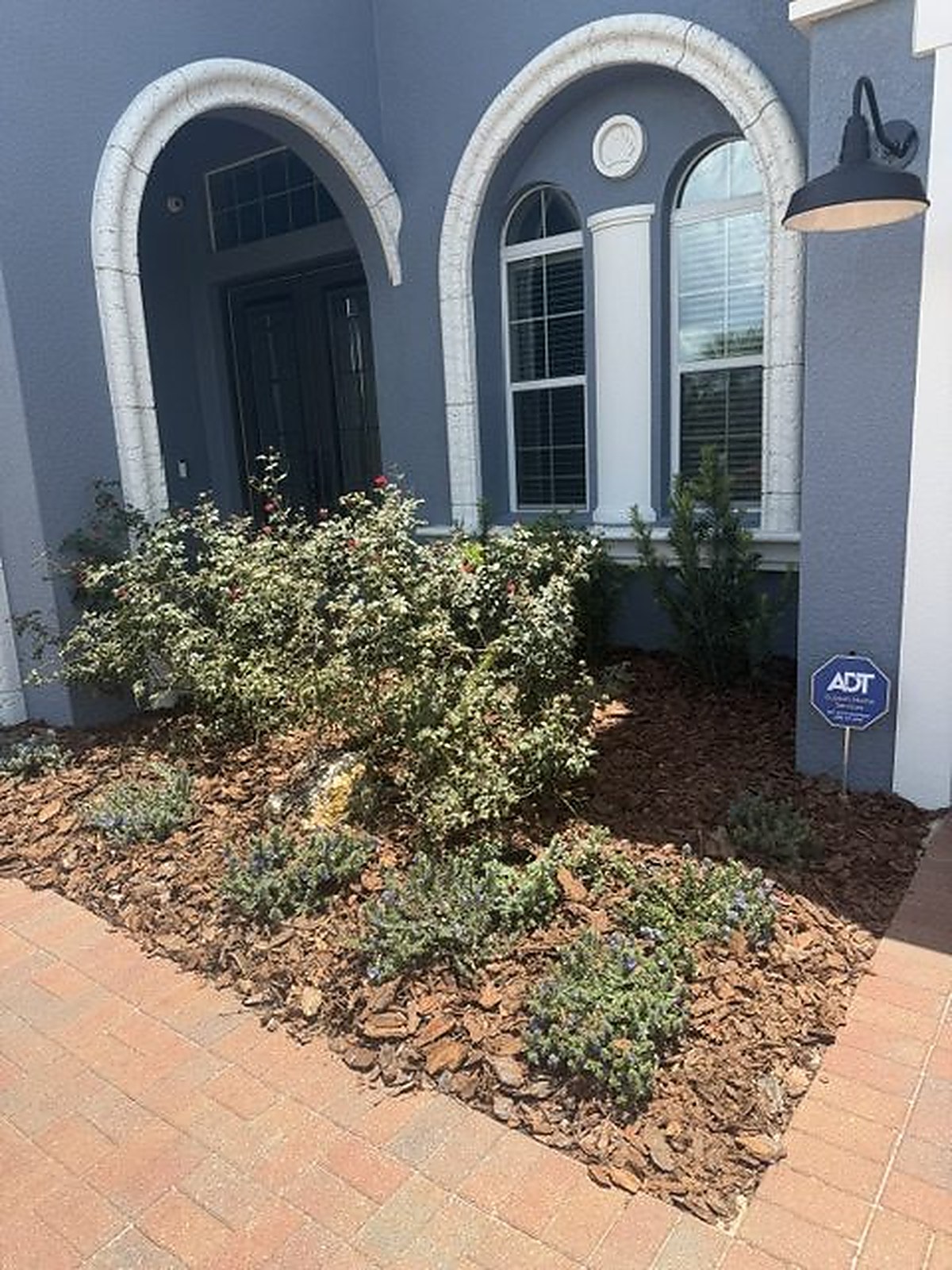
Your Tampa Yard Checklist for the Dry Season
What to fix in October after the wet season, from drainage damage to washed-out beds and compacted turf.
October is when a Tampa yard starts telling the truth about the wet season. The daily storms ease, standing water disappears and damage that looked temporary becomes easier to separate from an ongoing site problem. Before covering washed areas with new mulch or replacing thin turf, walk the property and look for the route the water took.
What months of rain leave behind
Erosion channels are the most direct record. Small grooves through beds or bare lines across turf show where runoff gained speed. Washed-out mulch and exposed roots point to the same movement. Refilling those areas without changing the source usually means doing the work again after the next heavy storm.
Turf may be compacted or rutted where saturated soil carried foot traffic, mowers or equipment. Low areas can stay thin because roots spent too long in wet ground. Drains and catch basins may collect silt, leaves and mulch, reducing the capacity they had at the start of summer. A low spot that seemed minor in spring may now be clearly outlined by stressed grass and deposited soil.
Trace where the water actually ran
Start at the high side of the property and follow the evidence downhill. Look below roof valleys, driveway edges, gates and neighboring grades. A clean strip through mulch, a fan of sand at the bottom of a slope or staining along a wall can reveal a concentrated flow that is easy to miss during dry weather.
Do not assume the lowest visible puddle is the source. It is often only the final collection point. The useful question is where the water entered the area and what prevented it from continuing to a safe outlet.
Check every downspout
Confirm that extensions are still connected and that their outlets have not been buried by mulch, crushed by traffic or turned back toward the house. Water should not dump beside the foundation or across a walkway. Also check whether roof runoff crosses a new planting bed or paved area that changed its path during the year.
Downspouts move a large roof area into a few concentrated discharge points. A small shift at one outlet can explain a washed bed or soggy corner elsewhere. If extensions alone cannot reach a suitable location, include them in a broader yard drainage assessment.
See whether the grade shifted
Fresh fill, loose planting soil and repaired utility trenches can settle during a wet season. Check transitions at patios, driveways, pool decks and foundations for new low edges. Soil should direct water away from structures without burying weep points, siding or other building details.
If pavers have moved locally, the cause may be water entering the base rather than a problem with the units themselves. Areas around driveway pavers deserve attention because runoff from a broad paved surface can expose a weak shoulder or an incomplete outlet quickly.
Clean drainage features before the next cycle
Open grates and remove visible debris from catch basins and channel drains. Check that outlet points are not blocked by vegetation or sediment. A drain is only useful when water can enter it and leave it. If it repeatedly fills with soil, correct the erosion feeding it rather than treating cleaning as the complete solution.
Why the dry season is the repair window
From October into spring, more predictable ground conditions make it easier to inspect grades, prepare hardscape bases and complete drainage work without an open excavation repeatedly filling with stormwater. Drier weather also makes the behavior of remaining wet areas more obvious; a soggy patch after the storms stop is stronger evidence of a persistent low point, irrigation issue or high groundwater condition.
Use the dry season to fix causes in the right order: control roof discharge, create a safe path for surface water, stabilize eroding soil, then restore beds and turf. Hardscape should follow the same sequence. Drainage and grade are resolved before a new patio or driveway covers the ground, so the finished work supports the way the whole yard needs to move water.
Keep reading
Can You Get a Paver Patio Built Before the Holidays in Tampa?
Fall is the best window for paver work in Tampa, but the holiday calendar fills fast. What to decide early, what slows a project, and how to plan it right.
READHow Should You Adjust Your Irrigation When Tampa's Dry Season Starts?
When the rains stop, most Tampa sprinkler systems keep watering like it is July. How to scale back, what to check, and when to call in a system audit.
READThe Best Time of Year to Build a Paver Patio in Florida
Why October through April is the window for hardscape work in Tampa, what the wet season does to a base, and how far ahead to book.
READGot a project on your list?
Paver patios, driveways, pool decks, retaining walls, sod and landscape design across the Tampa Bay area — free written estimates.