What Should You Plant in Tampa in the Fall?
Fall is one of the best times to plant shrubs, trees and beds in Tampa. Why the cooler months help roots, what to choose, and how to plan beds that last.
Fall is one of the best times to plant shrubs, trees and landscape beds in Tampa, because the cooler temperatures let new plants build roots without the stress of summer heat. Focus on Florida-friendly shrubs, trees and perennials that suit your light and soil, and plan the irrigation and bed layout at the same time so the new plants establish well through the dry season.
Many homeowners assume spring is planting season everywhere. In the Tampa Bay area, autumn is often the better choice for woody plants and permanent beds. Here is why, and how to approach it.
Why fall planting works in Tampa
Summer planting is hard on new plants. Intense sun and heat push them to lose water faster than a small root ball can replace it. In fall, the heat eases, days shorten, and plants can put energy into roots instead of just surviving. By the time the hot months return, a fall-planted shrub or tree has had time to settle in.
The tradeoff is rainfall. The dry season means you cannot count on storms to water new plantings. That is why irrigation matters so much for fall installs, and why we plan it together with the planting rather than as an afterthought.
Choosing plants for your yard
Start with the conditions, not the catalog. How many hours of direct sun does the bed get? Does it stay wet after rain or dry out quickly? Is it near the coast, where salt spray matters, such as properties in Apollo Beach, Ruskin, Gibsonton or Dunedin? Is it close to the house, where a plant's mature size matters?
Florida-friendly and native plants are usually the most reliable choices because they are adapted to our heat, sandy soils, and seasonal rain pattern. The University of Florida's Florida-Friendly Landscaping program publishes plant guides that are a good starting point for homeowners.
Think about mature size. A shrub that looks right in a small container can overwhelm a window or walkway in a few seasons. Spacing plants for their mature size saves pruning and replacement later.
Layering a bed so it looks finished
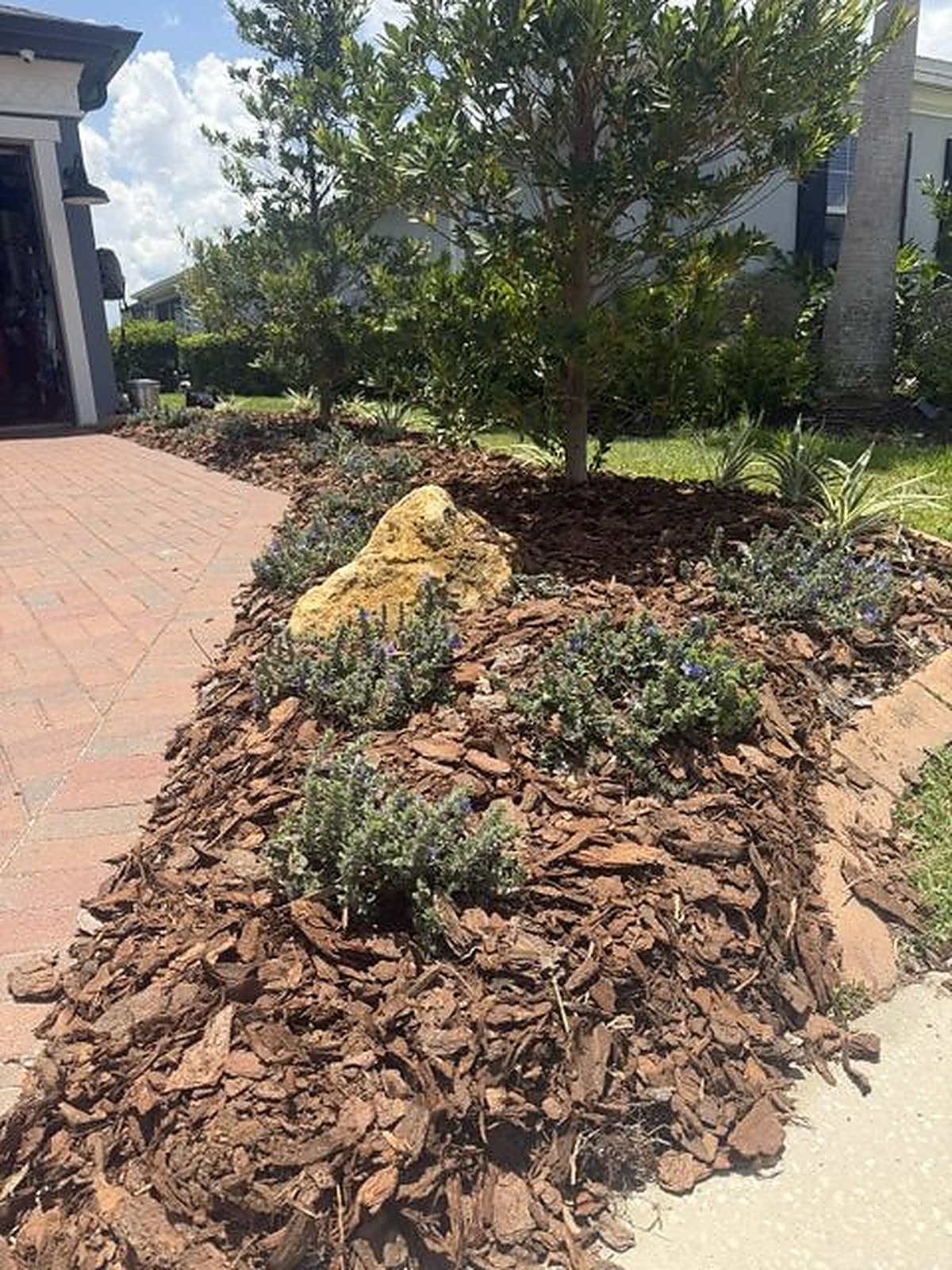
Well-designed beds usually layer plants by height, with taller shrubs or small trees at the back, mid-size shrubs in the middle, and groundcovers or low perennials at the front. Repeating a few plant choices across the bed looks more intentional than planting many different single specimens.
Edging defines the bed and keeps turf from creeping in. Mulch or decorative rock helps hold moisture, suppress weeds and give the bed a clean look. Mulch depth and type matter; too much piled against stems can cause problems.
Soil preparation matters
Much of the Tampa area has sandy soil that drains quickly and holds few nutrients, and some lots have compacted fill or areas with poor drainage. Preparing the bed, removing old turf and weeds, and amending where appropriate gives new roots a better start. If a bed stays wet for long periods after rain, the plant choice or the drainage may need to change.
Standing water in a planting area is worth solving before you plant. Our yard drainage page covers the common fixes, such as regrading or adding drains.
Watering new plants through the dry season
New plantings need more attention than established ones. The goal is regular, deep watering at the root zone while the plants establish, then gradually less. Beds and lawn usually need different schedules, so it helps when they are on separate irrigation zones. Drip or low-volume irrigation in beds puts water where roots are and avoids wetting foliage and walkways.
How often and how long to water depends on the plant, the soil, the weather and your local watering rules. We set that up as part of the install and explain it before we leave.
Planning the whole yard, not just a bed
Fall is a good time to step back and look at the whole property. How do the beds relate to the patio, walkway and driveway? Is there a view you want to frame or screen? Would landscape design and hardscape work together better if planned at once?
Planting is often the finishing layer on a bigger project. If you plan a patio or walkway this winter, it usually makes sense to build the hardscape first, then plant around it, so new plants are not trampled by the crew.
What drives the cost of a planting project
The cost depends on the size of the area, how much preparation is needed, the size and type of plants, irrigation changes, edging and mulch or rock. Larger plants establish a finished look faster but cost more than smaller ones that need time to fill in. A free estimate is the best way to see options side by side for your yard.
Our terms include a plant guarantee, and plant health depends on proper watering, so we will explain what is covered and what care is expected when we put your estimate together.
Common fall planting mistakes
The mistakes we see most often are planting too close to the house, choosing sun-loving plants for a shady bed, burying the root ball too deep, piling mulch against trunks and stems, and assuming the rainy season will return soon enough to water new plants. Each of these is easy to avoid with a little planning. Plant at the right depth, give each plant room for its mature size, keep mulch pulled back slightly from stems, and set up irrigation before the plants go in rather than after they start to wilt.
Another common mistake is buying plants first and designing second. A plan that starts with the site and ends with a plant list almost always looks better and lasts longer than a collection of impulse purchases squeezed into whatever space is left over.
Get a fall planting plan
We design and install landscapes across the Tampa Bay area, including Tampa, Brandon, Riverview, Plant City, Odessa and Palm Harbor. See our landscape design and planting services, check our service areas, or request a free estimate and we will help you choose plants that suit your yard and your routine.
Keep reading
Can You Get a Paver Patio Built Before the Holidays in Tampa?
Fall is the best window for paver work in Tampa, but the holiday calendar fills fast. What to decide early, what slows a project, and how to plan it right.
READHow Should You Adjust Your Irrigation When Tampa's Dry Season Starts?
When the rains stop, most Tampa sprinkler systems keep watering like it is July. How to scale back, what to check, and when to call in a system audit.
READYour Tampa Yard Checklist for the Dry Season
What to fix in October after the wet season, from drainage damage to washed-out beds and compacted turf.
READGot a project on your list?
Paver patios, driveways, pool decks, retaining walls, sod and landscape design across the Tampa Bay area — free written estimates.